


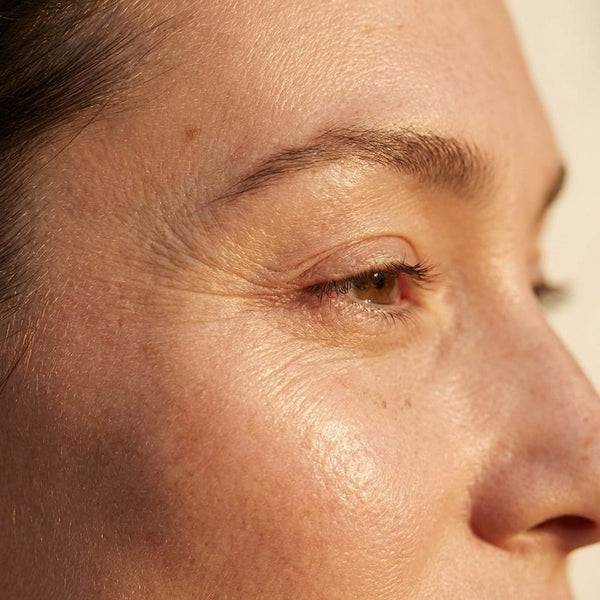


There are many reasons why you might want to remove acne scars on your face. For example, it could be from squeezing breakouts, having acne, or getting other skin injuries like a shaving cut. Scars form in different ways and can also remain on the body after surgery, a wound, or an injury. Some scars are more visible than others and might never disappear, while others fade over time.
By definition, a scar is the result of the skin using connective tissue cells to heal an injury in the deeper skin layers, the dermis, instead of just using new skin cells. This gives the scar a different texture than the surrounding skin. It is, of course, a good thing that the skin heals this way, as it protects us from complications, but the result is often not aesthetically pleasing. We will now go through our best tips on how to treat your scars.
Remember that it can take a while before you notice results, depending on the type of scar you have and how many treatments are needed, but it is worth it!
Why do scars occur?
Scars form as a result of the skin being damaged and trying to heal itself as quickly as possible. The first thing that happens is a scab forms. The scab acts as a protective layer so the skin can work undisturbed to repair itself. It does this with the help of Collagen, which is a vital building block in the skin.
Why do scars become uneven or acne scars pitted?
The skin that forms, the scar tissue, differs from the rest of the skin. Because there is a rush to repair the damage, the Collagen is not laid down in the same structured way as the rest of the skin. There are raised scars, pitted scars, discolored scars, etc.
It all becomes a bit like repairing a pothole in the road by laying down new asphalt. Sure, there is less of a hole in the road, but you can clearly see the difference between the original pavement and the filler. It's not just the appearance of the scar that differs, but also the quality of the skin.
Discolored Scars
If the scar is discolored, it is because the skin has started to overproduce the pigment melanin. This is called a hyperpigmented scar. This happens especially easily if you expose the scar to sunlight. Therefore, you should protect your scars with clothing or high-protection Sunscreen. The scar is more sensitive to the sun and lacks hair follicles or sweat glands.
The older you get, the greater the risk that the scars you get will become visible and permanent. This is because the skin has a poorer ability to heal and less Collagen, as the levels of this substance decrease as we age. Collagen production begins to decline after the age of 25.
Hyperpigmentation vs. Hypopigmentation
If the scar lacks pigment, it is called hypopigmentation. The scar is then white and slightly raised from the rest of the skin, which is the opposite of hyperpigmentation—meaning the scar tissue does not produce any pigment at all. This is most common in light-skinned individuals.
Those with a darker Skin Tone often develop thicker scar tissue than those with a lighter Skin Tone. Scars can be either discolored or lack pigment.
Acne Scars - The Most Common Type of Scar
Acne scars appear after severe acne has healed. Acne scars can fall into the category of atrophic scars but can also leave behind PIH (post-inflammatory hyperpigmentation) - which is characterized by red discoloration in the healed area.
These scars caused by breakouts occur when the skin is damaged by inflammation from blemishes or cysts and can appear as acne pits, dark spots, or uneven texture. To remove acne scars or blemish marks, we recommend using Skinroller PRO as scar treatment.
If you have PIE, feel free to combine your microneedling treatment with a Retinol or Vitamin C serum to remove red acne scars and improve your Skin Tone. By t
Bäst rankade produkter inom Microneedling Kit


Bestseller
3 variants


3 variants
Skinroller + Radiant Vitamin C Serum - Skincare Kit
Instant glow for skincare beginners
599 kr
999 kr
40% rabatt


3 variants
Renewal & Glow - At-Home Microneedling Starter Kit
Gentle start to microneedling
599 kr
999 kr
40% rabatt


3 variants


3 variants
Skinroller + BRILLIANT - 10% Niacinamide & Zinc
Gentle pore refining at home
599 kr
999 kr
40% rabatt


3 variants


Glow Up Radiant Kit - Skincare kit for radiance
Smoother texture in 3 easy steps
679 kr
1 142 kr
40% rabatt
Leave a comment
Relaterade artiklar

- March 05, 2026
Here is how different professions can affect skin health The restaurant industry Working in the restaurant industry means your skin...

- March 05, 2026
Today we spend more time than ever before in front of screens. At the same time, we are becoming increasingly...

- March 05, 2026
Are you one of those who still don't use Vitamin C in your daily Skincare Routine? Then it's time to...