


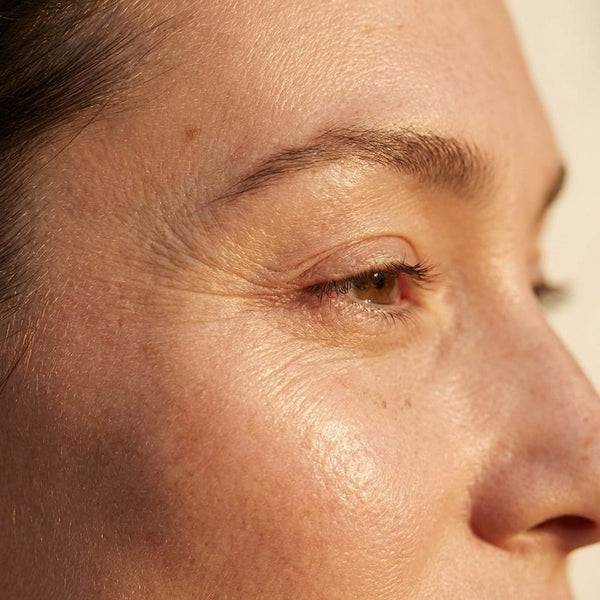


Four Common Skin Conditions During or After Menopause
Menopause is a crucial stage in life that often becomes noticeable around the age of 50. The skin's plumpness decreases drastically during menopause; studies show that up to 30% of the skin's Collagen disappears during the first five years. This results in the skin losing its shape more easily, which manifests as wrinkles, fine lines, and reduced elasticity in the facial contours.
Hormonal aging means major changes for both body and skin. Do you no longer recognize your complexion? That's completely natural. Here we go through the most common skin changes during and after menopause.
Dryness and Lack of Radiance
Dryness is often the most prominent problem in hormonal aging. This is due to the natural production of Hyaluronic Acid decreasing, making it harder for the skin to retain moisture.
Moisture and nourishment are key. To increase the moisture level, you should use products with Hyaluronic Acid and complement with essential oils that work to strengthen the skin from the inside out.
Sagging and Wrinkles
When estrogen levels drop, Collagen production is negatively affected. Collagen acts as the skin's internal padding, and when it decreases, the skin loses its structure. To counteract this, you should look for products with Vitamin A. Retinol is an effective ingredient that stimulates the skin's own Collagen production and reduces the visibility of wrinkles.
Enlarged Pores

As elasticity in the skin deteriorates with age, pores can appear larger. The skin loses its firmness and "stretches out," making the pore openings more visible. Use a serum that works to tighten pores and strengthen elasticity, preferably with ingredients like Niacinamide.
Increased Sensitivity
Many experience that their skin becomes more sensitive in their 50s. This is because the skin's pH value changes while the skin also becomes thinner, which hampers the barrier function. Prioritize barrier-strengthening products that soothe the skin and reduce redness.
Frequently Asked Questions About Menopause and Skin
Why does the skin get drier during menopause?
The decrease in estrogen lowers the levels of Hyaluronic Acid and lipids. Moisture evaporates faster, and the barrier loses its resilience, making the skin feel tight and flaky.
Which ingredient provides the fastest moisture for menopausal skin?
Low molecular weight Hyaluronic Acid binds water deep within the skin and plumps lines immediately. Seal it in with a cream containing Ceramides so the moisture stays longer.
Why do pores get larger after 50?
Collagen loss makes the skin less elastic, causing the opening around the hair follicle to stretch out. Serums with Niacinamide and Peptides can firm the skin and reduce visible pore size.
Bäst rankade produkter inom Anti-Aging


Bestseller
3 variants


Bestseller
Radiant Vitamin C Serum 15% Booster - Radiance Serum
Fades scars and firms skin
299 kr
499 kr
40% rabatt


3 variants
Skinroller + Radiant Vitamin C Serum - Skincare Kit
Instant glow for skincare beginners
599 kr
999 kr
40% rabatt


Bestseller
Brilliant Niacinamide + Zinc Serum - For Pores, Scars & Uneven Skin
Visibly smaller pores in 14 days
269 kr
449 kr
40% rabatt


Bestseller
Brilliant Anti-Acne - Blemish Face Cream
Clears breakouts and soothes redness
239 kr
399 kr
40% rabatt


3 variants
Renewal & Glow - At-Home Microneedling Starter Kit
Gentle start to microneedling
599 kr
999 kr
40% rabatt


Bestseller
Radiant Brightening Cream - Vitamin C Face Cream
Delivers radiance twice as fast
299 kr
499 kr
40% rabatt
Leave a comment
Relaterade artiklar

- March 05, 2026
Here is how different professions can affect skin health The restaurant industry Working in the restaurant industry means your skin...

- March 05, 2026
Today we spend more time than ever before in front of screens. At the same time, we are becoming increasingly...

- March 05, 2026
Are you one of those who still don't use Vitamin C in your daily Skincare Routine? Then it's time to...