





Beräknad leverans 2–3 vardagar
14 dagars ångerrätt



Face care
Ingredient
Skin type
Skin concern
Product lines
Popular right now

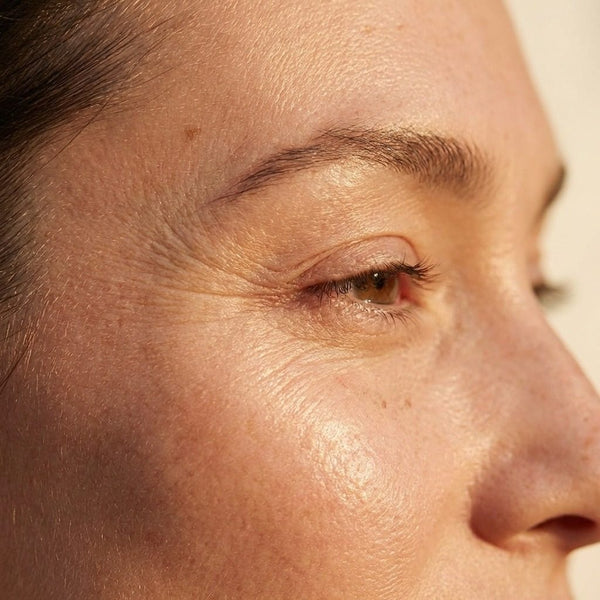
Almost everyone carries some kind of scar – from acne, surgery, chickenpox, or an injury. Some fade over time, others remain and tell a part of our story. But why do scars actually form, why do they look so different, and what determines if they disappear? Here we go through everything you need to understand about scars. (Do you want to know how to treat scars on the face – read our practical guide.)
A scar is by definition the result of the skin using connective tissue cells to heal an injury in the deeper skin layers, the dermis, instead of just using new skin cells. When the skin is injured, the body wants to repair the wound as quickly as possible. The first thing that happens is that a scab forms – a protective layer so that the skin can work undisturbed to repair itself. This repair occurs with the help of collagen, one of the skin's most important building blocks.
The problem is that there is a rush. The collagen is not laid down in the same fine, structured way as in the rest of the skin, and therefore the scar tissue gets a different structure. Imagine repairing a pothole in the road with new asphalt: the hole disappears, but you can clearly see the difference between the old surface and the filling. It is not just the appearance that differs – the quality of the skin is also different. Scar tissue also lacks hair follicles and sweat glands.
Because the healing happens quickly and unorganized, the result can be very different: raised scars, pitted scars, or discolored scars. How the scar turns out depends on how much collagen the skin produces during healing – too little creates a pit, too much creates a raised area. Age also plays a role: the older you are, the greater the risk that a scar becomes visible and permanent, as the skin's healing ability and collagen levels decrease. Collagen production begins to decline already after the age of 25.
If a scar does not heal as it should, it can develop into different types. The three most common are atrophic, hypertrophic, and keloid scars.
Atrophic scars occur when the skin loses collagen during healing, which leads to depressions in the skin. They are common after acne or chickenpox and look like small pits, because the skin produced too little tissue. Atrophic scars are usually thinner than the surrounding skin and are divided into three types:
Hypertrophic scars are raised, red, and thick, but stay within the original wound area. Scars that itch often belong to this category. They usually appear a few weeks after the injury, are most common in children, and often occur after burns or on the upper body. They often become smaller over the years.
Keloids are similar to hypertrophic scars but can appear several months after the injury and often grow outside the original injury's surface. They are due to an excessive collagen production, can become large, and are difficult to treat – surgery often just triggers the collagen process even more. Keloids are usually treated with compression dressings or silicone sheets, and should not be microneedled.
Not all scars are about structure – many are about color. If a scar is discolored, it is usually because the skin has overproduced the pigment melanin, so-called hyperpigmentation. This happens particularly easily if the scar is exposed to sunlight, which is one of the reasons why you should always protect scars with clothing or a high sun protection.
If the scar instead lacks pigment, it is called hypopigmentation – the scar then becomes white and sometimes slightly raised, because the scar tissue does not produce any pigment at all. It is most common in light-skinned people. People with darker skin tones often get thicker scarring and are more prone to hyperpigmentation.
Acne scars occur after severe acne has healed. They often belong to the atrophic scars, but acne also leaves behind two other marks that are often confused with scars:
Unlike real pitted acne scars, PIH and PIE usually fade on their own over time – even though it can take months.
Many scars mature and fade naturally during the first 1–2 years, as the skin rebuilds the collagen and the redness subsides. Color changes (PIH/PIE) often fade away on their own, while structural scars – like pitted atrophic scars – rarely disappear completely without treatment. How fast this happens is affected by your age, skin tone, genetics, and how well the scar has been protected from the sun.
Most scars are harmless and a natural part of the skin healing. But contact a doctor or skin therapist if a scar grows, itches severely, or hurts (can indicate a keloid), if it changes quickly, or if it affects you a lot. Keloids and large hypertrophic scars should always be assessed by a professional before you try anything yourself at home.
Yes – many scars can be made less visible, especially atrophic acne scars and discolorations. Microneedling, retinol, and vitamin C are among the most effective methods to work with at home. We go through exactly how you do it, step by step, in our guide: Treat scars on the face. See also our range for scars.
Scars form when an injury reaches the skin's deeper layers and the body repairs it with connective tissue (collagen) instead of normal skin. The new tissue gets a different structure and color than the surrounding skin.
Pigmentation changes and fresh, red scars often fade noticeably over time. Deeper structural scars rarely disappear completely on their own, but can be made significantly less visible with the right treatment.
Acne scars are a structural change in the skin (pits or raised areas), while pigmentation spots (PIH) are just a color change. Pigmentation spots usually fade on their own, pitted scars rarely do.
Partially. Do not pick or squeeze pimples and wounds, keep the area clean, and protect healing skin from the sun – the sun is the single biggest reason why scars become discolored and permanent.
Scars tell a part of our story, but that does not mean they always have to be permanent. The first step is always to understand what type of scar you have – then you can choose the right path forward.


Fades fine lines and shrinks pores


Retinol results without irritation


Here is how different professions can affect skin health The restaurant industry Working in the restaurant industry means your skin...

Today we spend more time than ever before in front of screens. At the same time, we are becoming increasingly...

Are you one of those who still don't use Vitamin C in your daily Skincare Routine? Then it's time to...
Betala som det passar dig. Du väljer i kassan — inget val görs här.
Faktura · från 0 krFri faktura i 14 dagar, längre tid mot avgift
SwishBetala direkt med mobilen
KortVisa, Mastercard och American Express
DelbetalningDela upp köpet på 3 till 36 månader
Alla priser inkluderar moms.
Handla för över 599 kr så lägger vi med en Brilliant Purifying Pink Clay Mask, värd 399 kr. Från oss till dig.
Gäller så länge lagret räcker.

