




Different types of filters in sunscreens
Approved sunscreens must contain a filter that protects against UVA and UVB radiation. The sun releases ultraviolet rays designated as C, but these do not reach the earth's surface and are nothing we need to worry about from a safety perspective. The different filters are either physical or chemical, and a blend of these is often used as they provide varying levels of protection against UVA and UVB radiation. A product containing sufficient UV protection is marked with a symbol stating UVA inside a circle.
Understanding SPF and protection
A sun protection factor indicates how long you can stay out in the sun without risking a burn compared to if you were using no protection. If your skin turns red and tender after fifteen minutes in the sun, you multiply that time by the SPF number. Below is how the different protections are graded according to the Medical Products Agency:
- Low protection: SPF 6-10
- Medium protection: SPF 15-25
- High protection: SPF 30-50
- Very high protection: SPF 50+
SPF 15 protects against 93% of UVB rays, SPF 30 against 97%, and SPF 50 against 98%. The number on the product is not the only factor that determines exposure time. The sun's rays are governed by a UV index that varies depending on the season, location, and ozone layer. A good tip to find out your exposure is to download the Swedish Radiation Safety Authority's app 'My Sun Time'.
Choose the right sunscreen for your environment
In countries where the sun is very strong, you should use sunscreen with SPF 50. In Sweden during the summer, the UV index is often between 4-7, compared to countries closer to the equator where the index is often around 10 year-round. It is important to use a high sun protection factor when spending time in these environments, even when it is cloudy. You should avoid the sun in the middle of the day between 11 AM and 3 PM, which applies both in Sweden and abroad. The choice between mousse, spray, or cream is mainly a matter of personal preference since the protection is the same regardless of texture.
The skin's condition also affects how long you should stay in the sun. Both pale and pigmented skin need a sun protection factor. Light and sensitive skin runs a higher risk of pigment spots and malignant melanoma. However, it is important to know that certain forms of skin cancer, such as squamous cell carcinoma, are due more to the total amount of sun exposure over a longer period than isolated burns. Lighter skin burns more easily, while darker skin is more prone to pigmentation.
Image: Sunscreen and SPF for daily use.
The sun's impact on the skin
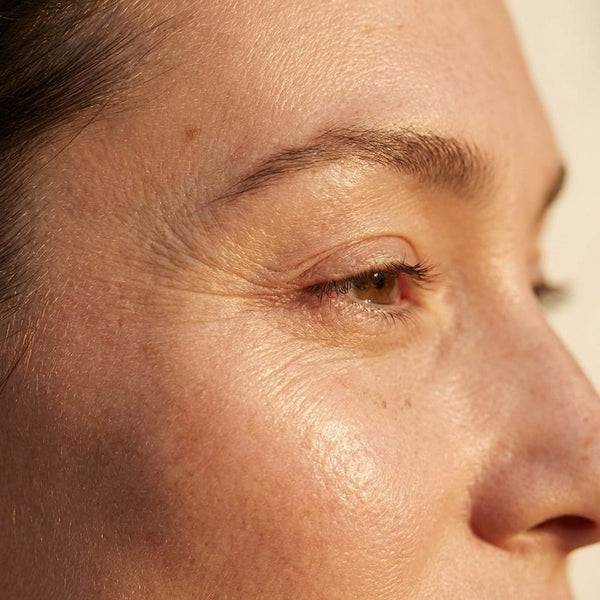
The sun significantly affects the skin. Pigment production increases when the sun reaches the skin and our skin tone darkens, which is the skin's way of protecting itself against damage. Spending time in the sun accelerates the skin's aging. Signs of sun damage include redness and a tingling sensation, meaning the skin has received more UV radiation than it can handle. The DNA in the cells can be damaged, forcing the skin to repair itself. In the worst case, this can lead to malignant tumors like malignant melanoma, actinic keratosis, squamous cell carcinoma, and basal cell carcinoma.
Understanding different UV radiations
When talking about UV radiation, there are three different variants. UVA rays have the longest wavelength, meaning they reach the deepest into the skin and cause the most damage. They contribute to photo-aging, lines, and can cause cellular damage leading to diseases. UVA radiation penetrates through clouds, making sunscreen necessary year-round.
UVB rays reach medium depth in the skin and stimulate the new production of pigment and Vitamin D production. Most of these rays are filtered out in the ozone layer, but exposure to too much UVB causes redness and burns. UVC radiation does not naturally reach the earth's surface as it is stopped by the ozone layer, but it can occur via industrial processes.
Application of sunscreen
For the sunscreen to
Bäst rankade produkter inom Sun Damaged Skin


Bestseller
10% Vitamin C Serum + Hyaluronic Acid - Radiance Serum
Fades dark spots and boosts glow
189 kr
329 kr
40% rabatt


Hyaluronic Acid 5% + Vitamin C Serum - Hydrating Serum
Our #1 serum for dewy radiance
179 kr
299 kr
40% rabatt


Bestseller
Magic Trio Serum Set - Three Facial Serums
3 serums for clear skin in 14 days
679 kr
1 142 kr
40% rabatt
Leave a comment
Relaterade artiklar

- March 05, 2026
Here is how different professions can affect skin health The restaurant industry Working in the restaurant industry means your skin...

- March 05, 2026
Today we spend more time than ever before in front of screens. At the same time, we are becoming increasingly...

- March 05, 2026
Are you one of those who still don't use Vitamin C in your daily Skincare Routine? Then it's time to...