


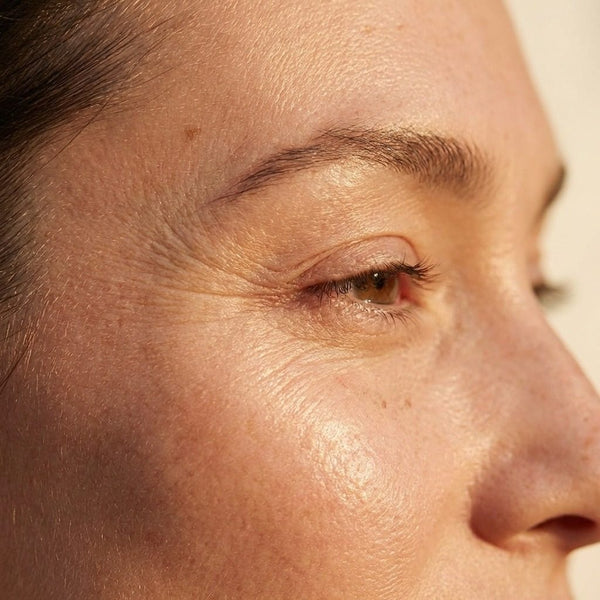







Pigmentation spots are also colloquially called melasma, age spots, or sun spots. There are several reasons why they appear. Common causes are prolonged sun exposure, hormonal changes (such as during pregnancy), or inflammation resulting from acne.
The spots themselves are harmless and occur when melanocytes, cells that produce pigment, produce an excess of melanin.
It is also possible to get white spots if the cells produce too little melanin. Many people who have pigmentation spots, especially on the face, seek effective at-home cosmetic treatments to reduce them.
How to treat pigmentation spots with Skinroller

"It used to look like I had a constant shadow on my chin, but now you can barely see it, even when I'm not wearing makeup."
This is how a customer describes the result after their cosmetic treatment. Microneedling is one of the most popular methods for treating pigmentation today. The cosmetic treatment is done both at salons and at home with Skinroller.
Skinroller is a type of dermaroller, a skincare tool designed to stimulate the skin's cell renewal and collagen production. Using many small needles, Skinroller creates micro-channels in the skin. When the skin begins its natural repair process, improvements in other skin concerns such as wrinkles, acne scars, and pigmentation spots are also stimulated.
Another benefit of the cosmetic treatment is that the micro-channels created act as small entrances, which makes it easier for creams and serums to penetrate deeper into the skin. If, for example, you use a skin-brightening cream to treat your pigmentation spots, its effect will be enhanced after microneedling.
How to use Skinroller for pigmentation spots
It is simple, fast, and painless to use Skinroller. On cleansed skin, you roll it a few times vertically, horizontally, and diagonally.
Skinroller is available in different needle lengths, and for pigmentation spots, 0.5 mm is recommended as it is a superficial concern.
Then apply a serum and finish with a day or night cream once the serum has absorbed. Perform the cosmetic treatment twice a week. Below we present two serums that, in combination with Skinroller, serve as powerful tools against pigmentation spots.
Which serum should I use for pigmentation spots?
A serum is a concentrated product with effective ingredients, where only 2-3 drops are enough for the entire face. It absorbs quickly into the skin and is ideally applied before you moisturize your face with your regular face cream.
The serum is often used to target a specific skin concern, such as pigmentation spots in this case, while the face cream primarily provides moisture and sun protection. There are specifically two serums in our assortment that we recommend for the cosmetic treatment of pigmentation spots, and those are serums containing Vitamin C and retinol.
It is important to add that if you use Skinroller before applying your serum, the skin's absorption capacity of the active ingredients increases by up to 200%.
Radiant Vitamin C Serum

We are incredibly proud of this serum which contains 15% Vitamin C, ferulic acid, and hyaluronic acid, which is a powerful moisturizer.
Vitamin C works in three ways against pigmentation spots: It stimulates the production of new skin cells, chemically exfoliates dead skin, and slows down the overproduction of melanin. This contributes to the spots fading or disappearing, and the overall skin tone becoming even and full of glow.
Intense Retinol 0.5% + Vitamin E
The second serum we want to recommend contains retinol and Vitamin E. Retinol is a form of Vitamin A, and when it is absorbed by the skin, it converts into retinoic acid. This ingredient is very powerful and versatile, often used to treat acne and wrinkles. It boosts the skin's own collagen production, which makes the skin soft and youthful. However, retinol has also proven to be very effective against pigmentation spots. Even though retinol is powerful, our formula is developed for sensitive skin and contains moisturizing Vitamin E as well as soothing chamomile.
You should, however, be aware that your skin becomes more sensitive to the sun when you use retinol. Therefore, it is recommended to use the serum in the evening and always complement with sun protection during the day. It is also beneficial not to use the serum every evening initially, but to gradually let the skin get used to it.
We therefore recommend that you alternate this serum with the previous Vitamin C serum, as Vitamin C cannot be overused (unless you are allergic or hypersensitive).
FAQ about pigmentation spots
What are pigmentation spots?
Pigmentation spots, or hyperpigmentation, are dark spots on the skin that occur when the skin's natural pigment, melanin, is produced in excess. They can appear as freckles, sun spots, or more diffuse dark areas on the face and body.
Common causes are:
- Sun exposure
- Hormonal changes (e.g., during pregnancy or from birth control pills)
- Inflammation or damage to the skin, such as after acne or eczema
- Aging
What do dangerous pigmentation spots look like?
Most pigmentation spots are completely harmless, but there are exceptions. You should pay attention if you notice that a spot:
- Changes in size, color, or shape
- Has uneven edges or shows multiple color tones
- Suddenly appears without a known cause
These can be signs of skin changes that should be evaluated by a doctor. Are you unsure? Book an appointment with a dermatologist or health center for a check-up.
How do you get rid of pigmentation spots?
There are several ways to reduce the visibility of pigmentation spots, but it requires patience and consistency. Here are the most effective methods:
1. Sun protection – Your best friend
Use SPF 30 or higher every day, year-round. Without sun protection, you risk new spots forming and existing ones worsening.
2. Exfoliation and acids
Products with AHA acids (such as glycolic acid) or BHA (salicylic acid) help to exfoliate the skin and accelerate cell renewal, which evens out the skin tone over time.
3. Active ingredients for pigmentation spots:
- Niacinamide (Vitamin B3) - brightens and reduces inflammation
- Vitamin C - Evens out the skin tone and protects against oxidative stress
- Arbutin or licorice root extract - plant-based pigment reducers
- Retinol - stimulates cell renewal and collagen production
4. Professional cosmetic treatments
For deeper pigment, chemical peels, IPL (light therapy), or microneedling can provide more effective results. Combine with the right products for the best effect.
Tip: Be consistent with your skincare routine for at least 8-12 weeks to see results. Pigmentation spots do not disappear overnight, but the right cosmetic treatment makes a big difference over time.
Last updated 2025-05-26


