




What is Hyaluronic Acid?
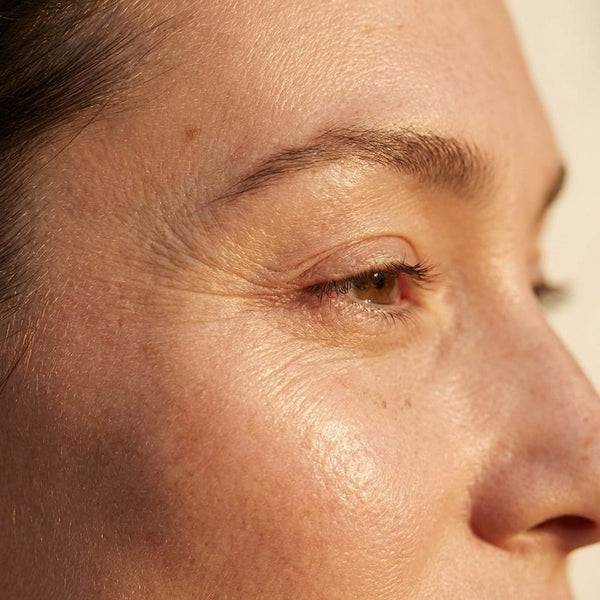
Even though the name indicates it's an acid, Hyaluronic Acid is not really an acid in the sense we are used to, like a strong ingredient that should be applied in moderation. In fact, it is a sugar molecule that naturally already exists in the skin to a high degree. Its function in the body is, among other things, to bind moisture and, together with Collagen and elastin, build up plumped and strong skin. At a younger age, there is naturally a larger amount of Hyaluronic Acid in the body but it decreases over time with age, leaving a drier, duller complexion that can look tired.
The natural Hyaluronic Acid in the skin is a sensitive molecule that is easily broken down by UV light and free radicals. Sun-damaged skin therefore usually looks drier, which is because the Hyaluronic Acid has been broken down to a greater extent since the molecule is sensitive to sunlight.
The skin gets drier over time
Since the natural levels of Hyaluronic Acid gradually disappear, it is good to add it to your skincare to restore the moisture balance. This doesn't only produce results for someone over 30, but works wonderfully at all ages to give the skin an extra boost, especially if your complexion tends to be on the drier side. Hyaluronic Acid locks in moisture and reduces water evaporation, which means less moisture escapes during the day, keeping the skin plump and fine all day long.
What is Hyaluronic Acid good for?
Since Hyaluronic Acid originates from the body itself with its moisture-binding capacity, it is not hard to figure out why it has become so popular in skincare today.
- A substance especially great for hydration.
- Hyaluronic Acid can be used in several forms as the molecule size can vary. It can be used in its purest form with small molecules in a serum to penetrate deep into the skin, but can also be used in a cream where it acts as a protective barrier.
- Works superbly even for sensitive skin.
- Provides a plumping effect as the Hyaluronic Acid molecules fill out dry lines and wrinkles, which also results in a glowy complexion.
- Adding Hyaluronic Acid is a great idea both summer and winter to give extra hydration, elasticity, and fullness to the skin.
Where does Hyaluronic Acid come from?
Even though Hyaluronic Acid is considered a natural ingredient by most, it is often produced synthetically. It can be produced from rooster combs, but it is more common to produce it through what is called bacterial fermentation. This is a very gentle ingredient that is safe. Skinroller has chosen to develop a vegan formula for our Hyaluronic Acid.
Choose the right types of Hyaluronic Acids
Hyaluronic Acid can come in several different molecular sizes that determine how deep into the skin it provides an effect. The smaller the molecules, the deeper it can work.
Hyaluronic Acid
If it says Hyaluronic Acid or hyaluronsyra in the ingredient list, it means the ingredient lays as a protective layer on the surface of the skin and helps bind moisture there. An example of such a product is Hyaluronic Acid Moisture Ampoule from Chamos Acaci.
Sodium hyaluronate
This ingredient, Sodium hyaluronate, has been developed to be able to penetrate deeper into the skin and counteract oxidation.
Sodium hyaluronate crosspolymer
This type has even smaller molecules and thus penetrates deeper into the skin layers. This is an excellent ingredient for combating wrinkles as it works deeply over time.
Apply Hyaluronic Acid correctly
If you have a serum with Hyaluronic Acid, apply it after cleansing. Our tip is not to dry the fa
Bäst rankade produkter inom Hyaluronic Acid


Bestseller
10% Vitamin C Serum + Hyaluronic Acid - Radiance Serum
Fades dark spots and boosts glow
189 kr
329 kr
40% rabatt


Retinol (Vitamin A) + Vitamin E Serum 0.25% - Anti-Aging Serum
Fades fine lines and shrinks pores
189 kr
329 kr
40% rabatt


Hyaluronic Acid 5% + Vitamin C Serum - Hydrating Serum
Our #1 serum for dewy radiance
179 kr
299 kr
40% rabatt


3 variants
Renewal & Glow - At-Home Microneedling Starter Kit
Gentle start to microneedling
599 kr
999 kr
40% rabatt


Bestseller
Magic Trio Serum Set - Three Facial Serums
3 serums for clear skin in 14 days
679 kr
1 142 kr
40% rabatt
Leave a comment
Relaterade artiklar

- March 05, 2026
Here is how different professions can affect skin health The restaurant industry Working in the restaurant industry means your skin...

- March 05, 2026
Today we spend more time than ever before in front of screens. At the same time, we are becoming increasingly...

- March 05, 2026
Are you one of those who still don't use Vitamin C in your daily Skincare Routine? Then it's time to...