









Do you first want to understand different types of scars and why they occur? Read our guide: Different types of scars.
There are many reasons why one might want to remove acne scars on the face. For example, it could be because you have squeezed pimples, had acne, or sustained other skin injuries such as cutting yourself while shaving. Scars form in different ways and can also be located on the body after surgery, a wound, or an injury. Some scars are more visible than others and may never disappear, while others fade away over time.
A scar is by definition the result of the skin using connective tissue cells to heal an injury in the deeper skin layers (dermis) instead of just forming new skin cells. This gives the scar a different texture than the surrounding skin. It is of course good that the skin heals this way, as it protects us from complications, but the result is often not aesthetically pleasing. Here we go through our best tips on how to treat your scars.
Remember that it can take a while before you notice results, depending on the type of scar and how many treatments are required, but the result is worth the effort!
How scars form
Scars form as a result of the skin being injured and trying to heal itself as quickly as possible. First, a scab forms. The scab acts as a protective layer so that the skin can repair itself undisturbed. It does this with the help of collagen, which is an important building block in the skin.
Why scars become uneven or pitted
The scar tissue that forms differs from the rest of the skin. Because the injury must be repaired quickly, the collagen is not laid down in the same structured way as in the surrounding skin. There are raised scars, pitted scars, discolored scars, and more.
It can be compared to repairing a pothole in the road with new asphalt. There is certainly less of a hole in the road, but you can see a clear difference between the original paving and the filling. It is not only the appearance of the scar that differs, but also the quality of the skin.
Discolored scars
Discolored scars are due to the skin overproducing the pigment melanin. This is called hyperpigmentation and occurs especially if the scar is exposed to sunlight. Therefore, you should protect your scars with clothing or sunscreen with high sun protection. Scar tissue is more sensitive to the sun and lacks hair follicles and sweat glands.
The older you get, the greater the risk that scars become more visible and more permanent. This is because the skin's healing ability decreases with age, as does collagen production. Collagen production declines after the age of 25.
Hyperpigmentation and hypopigmentation
If a scar lacks pigment, it is called hypopigmentation. The scar then becomes white, often slightly raised from the surrounding skin, and is due to the scar tissue not producing any pigment at all – the opposite of hyperpigmentation. This is most common in light-skinned individuals.
People with dark skin tones often get coarser scarring than those with light skin tones. Scars can be either discolored or lack pigment.
Acne scars – The most common type of scar
Acne scars occur after severe acne has healed. Acne scars can belong to the category of atrophic scars (described below) but can also leave behind PIH (Post-Inflammatory Hyperpigmentation), which is characterized by red discolorations on the healed area.
These scars occur when the skin is damaged by inflammation from pimples or cysts, and can appear as pits, dark spots, or uneven skin texture. To reduce the visibility of acne scars or scars from pimples, we recommend Skinroller Pro as a scar treatment.
If you have PIE (Post-Inflammatory Erythema), feel free to combine your microneedling treatment with retinol or vitamin C serum to reduce red acne scars and improve skin tone. With patience and the right products, you can see noticeable improvements and feel more confident in your skin.
Three common types of scars
There are different types of scars. If a scar does not heal properly, it can develop into a hypertrophic, keloid, or atrophic scar. Depending on the type of scar, it can be treated with microneedling to become less prominent.
Atrophic scars
Atrophic scars occur when the skin loses collagen during the healing process, leading to depressions or deeper scars in the skin. They often appear after acne, chickenpox, or similar. They look like small pits in the skin and are due to the skin producing too little tissue.
These scars are usually thinner than the surrounding skin and are divided into three main types:
- Ice pick scars: Narrow, deep, and pointed scars that resemble needle punctures.
- Boxcar scars: Wider and more clearly defined scars with sharp edges.
- Rolling scars: Soft, wavy depressions in the skin that give an uneven appearance.
They are the opposite of scars where the skin has produced too much tissue, which we will go through next.
Hypertrophic scars
Hypertrophic scars are confined to the wound area and become raised, red, and thick. Scars that itch often belong to this category. They usually appear a few weeks after a skin injury. These scars are most common among children and often occur with burns. The risk is also greater for children than for adults, and the scars often become smaller over the years.
Sometimes a skin graft may be needed to treat hypertrophic scars, though usually not for aesthetic reasons but to restore function.
Do you have an old scar that itches? Then it is likely a hypertrophic scar!
Keloid scars
Keloids are very similar in appearance to hypertrophic scars, but can appear several months after an injury and often cover a larger area than the original skin injury. They occur as a result of excessive collagen production. They can grow significantly and are difficult to treat, as surgical removal often triggers an even stronger collagen production.
We do not recommend using microneedling or a dermaroller to treat keloid scars.
Keloids are often treated with compression dressings or a silicone sheet.
Treat scars with a dermaroller
Studies have shown that microneedling is an effective treatment that provides very good results on scars on both the face and the body. Microneedling works by small needles creating microscopic channels in the skin. This stimulates the skin's natural healing process, increases collagen production, and improves skin texture, which reduces the visibility of scars and unevenness.
Atrophic scars: Yields good results with microneedling.
Hypertrophic scars: Yields good results with microneedling.
Keloid scars: Avoid microneedling. Use a silicone-based ointment for scars instead, such as Cicamed Scar, which is one of the most effective treatments.
Microneedling is more gentle compared to other treatments aimed at creating new scar tissue. It is important to be aware that it can take several weeks or months before the desired result is achieved. This is because the skin follows a 28-day cycle, where it goes through different phases to repair damage and build new tissue.
Benefits of microneedling for scar treatment:
- Safe and gentle: Less risk of pigment changes and scarring compared to fractional laser or chemical peels.
- Strengthens the skin's outermost layer over time.
- Versatile: Treats both face and body, even old scars.
- Effective scar remodeling: Stimulates the skin's natural healing process.
- No limitations: Can be repeated indefinitely and provides gradual improvement.
- Affordable: Skinroller Pro costs 499 kr and lasts for up to 12 treatments.
- Increased effect of skincare: Improves the absorption of Retinol, Vitamin C, and other caring products by up to 200 percent.
Whether you want to treat scars on the face, on the lip, or on the arms, Skinroller Pro is a suitable treatment, especially for acne scars. It is gentle and natural for the skin.
How to use Skinroller Pro for scars on the face
We recommend that you treat the affected area a maximum of once a week. The treatment is simple and usually painless. You simply roll Skinroller Pro vertically, horizontally, and diagonally. For detailed instructions, read more on the product page for Skinroller Pro. The result is smoother skin.
Treatment with a dermaroller not only provides positive results on scars, but also on many other skin concerns such as wrinkles and pigmentation spots. It is best to combine Skinroller with one or more serums, as the micro-injuries that occur act as small channels where active ingredients can travel. This leads to up to a 200 percent better effect of your skincare products.
Risks of microneedling on the face
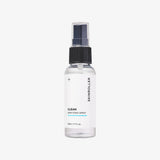
Hygiene is crucial after using a dermaroller, as the microneedles create small channels in the skin that temporarily make it more susceptible to bacteria. Poor hygiene can lead to infections, irritation, or prolonged healing time, which counteracts the positive effects of the treatment. Reduce the risk through careful cleaning of your dermaroller, for example with Clean Dermaroller 50 ml.
Creams for scars
Cicamed Scar – Best in test
Are you looking for a cream for scars on the body? Cicamed Scar is a silicone gel for scar treatment that effectively reduces the visibility of both old and new scars, including acne scars, surgical scars, and scars from injuries. This scar ointment softens and smooths the skin. A perfect cream for scars after surgery. With positive reviews and a proven formula, Cicamed Scar is a popular choice for improving the skin's appearance.
Vitamin C for scars
For scars, it is very effective to use a Vitamin C serum, as it can even out the skin tone. It is especially effective for red acne scars. Vitamin C does not actually bleach the skin, even if it may seem so. What happens instead is that Vitamin C inhibits melanin production.
Retinol to remove scars
If you have problems with dark scars, a serum with retinol works excellently to fade them. This is because retinol chemically exfoliates away the top skin layers, promotes cellular turnover for faster formation of new cells, and increases the skin's collagen production. The collagen also contributes to making the scar softer. You should keep in mind that retinol makes the skin more sensitive to the sun, which it already is where a scar is located. This means it is important to apply sunscreen to the scar or cover it with clothing, even in cloudy weather. Furthermore, retinol should be used in the evening instead of in the morning. It can take time for the skin to get used to retinol, so it is best not to use it every day at first but to alternate with another serum.
Frequently asked questions and answers about scars
How do you get rid of acne scars?
Acne scars can be treated effectively with microneedling, retinol, and Vitamin C. Skinroller Pro stimulates collagen production and smooths the skin's texture. For best results, combine with an active serum.
How do you get rid of scars after surgery?
Scars after surgery can be treated with a silicone gel like Cicamed Scar. Microneedling also works for some, but avoid it if the scar is keloid. Always protect the scar from the sun to reduce discoloration.
How do you get rid of scars on the lip?
Scars on the lip are more sensitive to treat. Microneedling can be used carefully, but feel free to consult a skin therapist first. Silicone gel can also help to soften and smooth.
How do you get rid of scars after a C-section?
C-section scars often respond well to silicone sheets or silicone gel. After a few months, microneedling can be considered, if the scar is not keloid. Feel free to combine with skincare that stimulates collagen.
How can you remove self-harm scars?
Self-harm scars vary a lot. Atrophic and hypertrophic scars can be treated with microneedling, while silicone gel works to reduce raised areas. Be gentle and feel free to consult our customer service for an individual recommendation.
Do you have a cream for scars from pimples?
Yes! Cicamed Scar is a silicone gel that works well on scars from pimples. For red pigmentation spots, we also recommend Vitamin C and retinol to even out the skin tone.
Summary of scar treatment
Scars on the body tell a part of our history, but that does not mean they always have to be permanent. Before you start treatment for scars, it is important to consider the following:
- Identify what type of scar you have and which method is suitable.
- Removing or fading scars takes time – be patient!
- Contact us at kundtjanst@skinroller.se to get advice.
Reference: This information is taken from "The Concise Guide to Dermal Needling" by Dr. Lance Setterfield and is supported by established research on microneedling and its effects. We have also based our recommendations on clinical studies investigating collagen induction therapy and its effect on scar reduction, including the treatment of atrophic and hypertrophic scars. All to give you evidence-based advice for the best possible results.
Last updated 2025-05-22


