


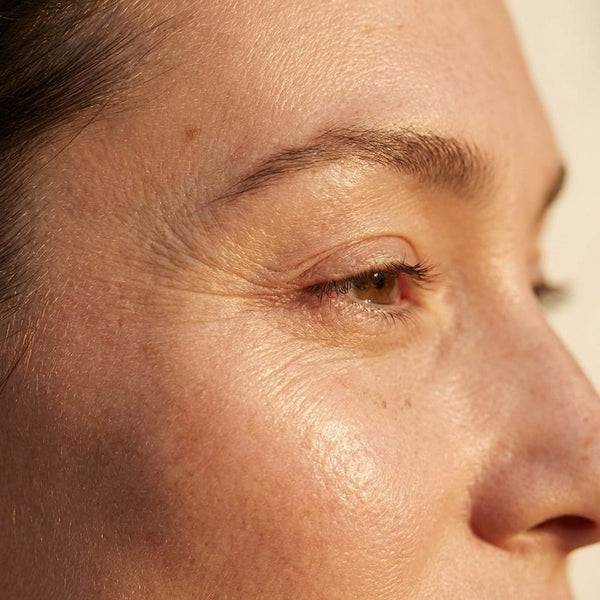


Benefits: Powerful antioxidant, Collagen-stimulating, Brightening, Protective
Categories: Anti-Aging, Pigmentation, Enhanced Radiance
Skin Types: All skin types, especially mature and uneven skin. Sensitive skin should choose milder derivatives.
Ascorbic acid, also known as L-Ascorbic Acid, is the purest and most potent form of Vitamin C in skincare. It is the only form that has direct biological activity in the skin without needing to be converted. This makes it the most effective — but also the most sensitive — variant of Vitamin C.
Unlike more stable Vitamin C derivatives such as Magnesium Ascorbyl Phosphate (MAP) or Sodium Ascorbyl Phosphate (SAP), ascorbic acid acts immediately upon application. However, it is unstable in water-based formulations and oxidizes easily upon contact with air and light — which is why products with pure ascorbic acid often come in dark bottles with airtight pumps.
Benefits of Ascorbic Acid
- Powerful antioxidant: Ascorbic acid neutralizes free radicals from UV radiation and environmental pollution more effectively than any other form of Vitamin C. It protects the skin's collagen and elastin from oxidative breakdown.
- Stimulates collagen synthesis: L-Ascorbic Acid is directly involved in collagen production. Regular use improves the skin's firmness, resilience, and elasticity — one of the most well-proven anti-aging effects in skincare.
- Reduces hyperpigmentation: Ascorbic acid inhibits the enzyme tyrosinase, which controls melanin production. This makes it effective against dark spots, sun damage, melasma, and post-inflammatory hyperpigmentation.
- Immediate radiance: Many experience visibly brighter and more radiant skin after just a few days of use thanks to ascorbic acid's ability to even out skin tone.
- Enhances sun protection: Ascorbic acid does not replace SPF, but combined with sunscreen, it provides an extra layer of antioxidant protection against UV damage.
Ascorbic Acid vs other forms of Vitamin C
There are many forms of Vitamin C in skincare. Here is how ascorbic acid differs:
- L-Ascorbic Acid (Ascorbic Acid) — Most potent, most studied. Acts directly. Unstable, can irritate. Optimal concentration: 10–20%.
- Magnesium Ascorbyl Phosphate (MAP) — More stable, milder. Good for sensitive skin. Slightly less potent.
- Sodium Ascorbyl Phosphate (SAP) — Stable, water-based. Antimicrobial effect — great for acne.
- Ethyl Ascorbic Acid — Stable and effective. Penetrates well. Newer derivative with promising research.
- Ascorbyl Glucoside — Very stable. Converts to ascorbic acid in the skin. Milder but slower effect.
How to use Ascorbic Acid
- Application: Apply a small amount of serum (3–4 drops) to cleansed, dry skin. Wait one minute before applying the next product.
- Frequency: Start with every other day to let your skin adjust. Gradually increase to daily use.
- Timing: Morning is recommended — ascorbic acid enhances the effect of sun protection. Always follow up with SPF 30+.
-
Combine with: Vitamin E and Ferulic Acid — the classic trio that stabilizes ascorbic acid and boosts its antioxidant effect. Hyaluronic Acid for hydration. Avoid using directly alongside retinol,
Bäst rankade produkter inom Bestsellers
BÄSTSÄLJARE 40% rabatt
 BestsellerBrilliant Purifying Pink Clay Mask - Face Mask
Deep cleans without that tight feel
239 kr 399 kr 40% rabatt40% rabatt
 Bestseller3 variants40% rabatt
 Bestseller10% Vitamin C Serum + Hyaluronic Acid - Radiance Serum
Fades dark spots and boosts glow
189 kr 329 kr 40% rabattBest for Acne 40% rabatt
 BestsellerRadiant Vitamin C Serum 15% Booster - Radiance Serum
Fades scars and firms skin
299 kr 499 kr 40% rabattBest for Acne 40% rabatt
 Bestseller40% rabatt
 Bestseller


Leave a comment
Relaterade artiklar

- April 04, 2026
Benefits: Deeply pore-cleansing, Combats blackheads, Anti-inflammatory, ExfoliatingCategories: Acne, Enlarged Pores.Skin Types: Oily skin, Combination skin, Blemish-prone skin Imagine a smart,...

- April 04, 2026
Benefits: Protects against skin cancer, Prevents wrinkles, Combats pigmentation spots, Preserves skin healthCategories: Anti-Aging, Pigmentation.Skin Types: All skin types Imagine...

- April 04, 2026
Benefits: Hydrating, Mildly exfoliating, Provides radiance, Barrier-strengtheningCategories: Dry Skin Conditions, Uneven Skin Tone.Skin Types: All skin types, Dry skin, Sensitive...