


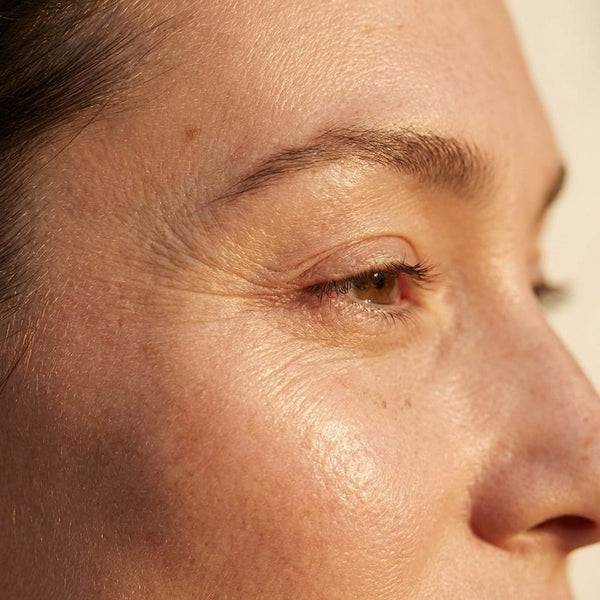


Benefits: Protects against skin cancer, Prevents wrinkles, Combats pigmentation spots, Preserves skin health
Categories: Anti-Aging, Pigmentation.
Skin Types: All skin types
Imagine the absolutely most important, effective, and irreplaceable product in your skincare routine. A product that all dermatologists and experts completely agree on. This is sun protection. It is not just a product for beach days, but the daily insurance for your skin's health and youthfulness.
SPF stands for Sun Protection Factor. It is a measure of how well a product protects you from the sun's UVB rays, the ones that cause sunburn. But a modern, good sunscreen does much more. A "broad-spectrum" sunscreen also protects against UVA rays, which invisibly accelerate the skin's aging process. Using sun protection every day is absolutely the best thing you can do for your skin.
Benefits of SPF
- Prevents skin cancer: This is the most important reason. Daily use of sunscreen has been proven to reduce the risk of all forms of skin cancer, including malignant melanoma.
- Is the best anti-aging product: About 80% of the skin's visible aging (wrinkles, loss of firmness) is caused by the sun. By using sun protection every day, you protect your collagen and elastin, keeping the skin firm and smooth longer.
- Counteracts and reduces pigmentation spots: The sun is the main driver behind pigment production. If you treat pigmentation spots but don't use sunscreen, they will always return. Sun protection is crucial for an even skin tone.
- Protects the skin barrier and reduces redness: The sun's rays stress the skin and can weaken its protective barrier, leading to sensitivity and redness. A daily defense helps keep the skin calm and resilient.
Skin Types and Uses
Which skin type should use sun protection? The answer is simple: all of them. Every day. Year-round. Even when it is cloudy, and even if you are just sitting indoors near a window.
- For anyone wanting to prevent premature aging and wrinkles.
- For anyone wanting to avoid developing or worsening pigmentation spots.
- For anyone wanting to reduce their risk of skin cancer.
- For anyone using active ingredients (like retinol or acids), as these make the skin extra sun-sensitive.
How to use SPF
- Application: Always use sun protection as the last step in your morning routine, after your moisturizer. Do not mix it with your cream, as this dilutes the protection.
- Amount: This is critical! You need a generous amount to achieve the protection stated on the bottle. A common recommendation is an amount corresponding to two fingers (index and middle finger) for the face and neck.
- Timing: Apply every morning, 365 days a year.
- Reapplication: If you are in direct sun, swimming, or sweating heavily, you must reapply every two hours to maintain protection.
Common Questions
Which SPF should I choose?
All leading dermatological organizations recommend at least SPF 30 for daily use. If you have fair skin, burn easily, or use strong active ingredients, SPF 50 is an even safer choice.
I get breakouts from sunscreen, what should I do?
This does not mean you should stop using sun protection, but rather that you need to find a different formulation. Try a lighter sunscreen adapted for oily or blemish-prone skin. Products with physical filters like zinc oxide can also be a milder alternative.
Isn't the SPF in my foundation enough?
No, unfortunately not. To get the SPF protection stated on yo
Bäst rankade produkter inom Sun Damaged Skin


Bestseller
10% Vitamin C Serum + Hyaluronic Acid - Radiance Serum
Fades dark spots and boosts glow
189 kr
329 kr
40% rabatt


Hyaluronic Acid 5% + Vitamin C Serum - Hydrating Serum
Our #1 serum for dewy radiance
179 kr
299 kr
40% rabatt


Bestseller
Magic Trio Serum Set - Three Facial Serums
3 serums for clear skin in 14 days
679 kr
1 142 kr
40% rabatt
Leave a comment
Relaterade artiklar

- April 04, 2026
Benefits: Deeply pore-cleansing, Combats blackheads, Anti-inflammatory, ExfoliatingCategories: Acne, Enlarged Pores.Skin Types: Oily skin, Combination skin, Blemish-prone skin Imagine a smart,...

- April 04, 2026
Benefits: Hydrating, Mildly exfoliating, Provides radiance, Barrier-strengtheningCategories: Dry Skin Conditions, Uneven Skin Tone.Skin Types: All skin types, Dry skin, Sensitive...

- April 04, 2026
Benefits: Powerful antioxidant, Collagen-stimulating, Brightening, Protective Categories: Anti-Aging, Pigmentation, Enhanced Radiance Skin Types: All skin types, especially mature and uneven...